Hi, Here is the second video.
istanbul at high speed from Coskun Istanbulluoglu on Vimeo.
10 March 2008

Istanbul two times faster than usual
My last video : )
with 2 hours effort, I made this...
it is recorded 2 years ago.
Istanbul two times faster than usual from Coskun Istanbulluoglu on Vimeo.
with 2 hours effort, I made this...
it is recorded 2 years ago.
Istanbul two times faster than usual from Coskun Istanbulluoglu on Vimeo.
09 March 2008
Piclens, a magic utility for Firefox
Hi people...
Piclens, is a magic utility to use to view galleries in facebook.
Try it please, you'll be glad to use it.
Piclens, is a magic utility to use to view galleries in facebook.
Try it please, you'll be glad to use it.
02 March 2008
About Turkey Candidature to EU

Original Presentation
Turkeys Trade with EU: (2005)
-Exports to the EU: 52.4%
-Imports from the EU: 42.2%
Why Turkey Wishes to Join EU?
Political:
-More stability in the democracy
-Freedom of movement,
-“Role model” for the Middle-East and more influence
-More defence and safety power
-Improve international policy efficiency
Economic :
-Improve efficiency and make Turkish firms more competitive
-More attractive for FDI, agricultural sector reforms
-Adhere to EU quality of consumer goods
Social:
-Possibility to improve the Turkish social model
-Improve living standards and education
-Reducing the regional differences and the “Gini factor”
The Advantages for the EU
Political:
-Influence growth in the Turkish neighbor countries
-Strategically good location (ex. Aegean See)
-Turkey got important energy resources (hydrocarbon)
-Turkey is the only state which can gain the trust of Israel and Palestine
-Islamic state
Economical:
-Biggest population growth rate, dynamical growth market
-FDI, new infrastructure, growth economical power for EU
-65 million new customers more competition
-Important location for energy and transport networks with the east
Social:
-New big market new employment
-The young Turkish population changes the demographic structure
-Only if Turkey fulfills the standards in social and ecological politics
RISKS:
-Biggest population => most important role in Council of ministers and in the Parliament
-Economical deployment and agreement process goes slower
-Turkey will need every year €27 billion; no backflow because already in the Customs Union
-Turkey is culturally different, it is impossible to implement the European value system
-Danger for migration waves
-Surrounded by crisis regions
RESUME
-Different cultures and history
-Would become very influential in the EU.
-Strategically and economically important
-Access to the Islamic world
About Armenian-Turkish issues at 1915
Here is a very good text.
Read it to be informed about the problem.
Find the reference list from here
----
The Armenian Genocide Accusation
The Ottoman Turks are accused of planning and executing a scheme to exterminate its Armenian population in Eastern Anatolia beginning on or about April 24, 1915 by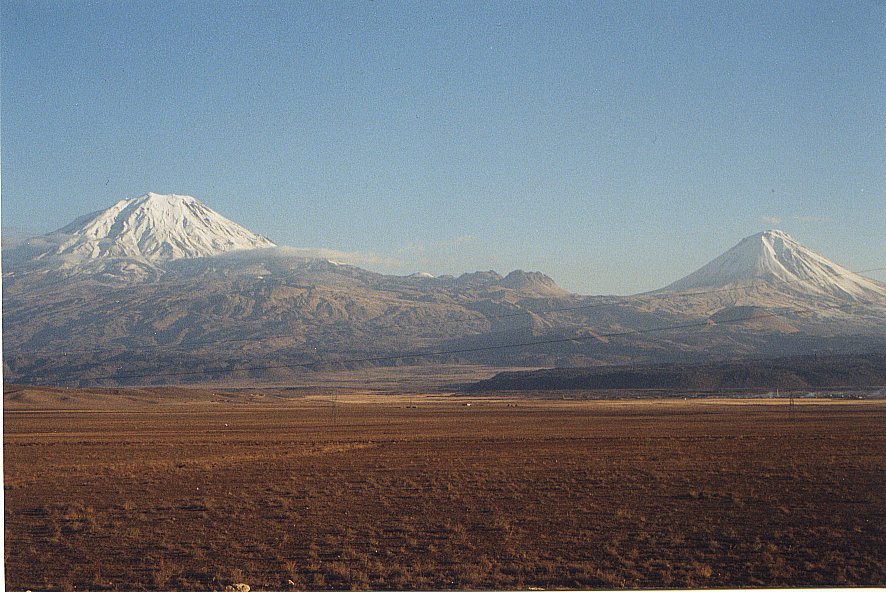 relocating them hundreds of miles to the Southwest and away from the Russian war front and massacring those who resisted. The mass relocation (often mischaracterized as "deportation") exposed the Armenians to mass killings by marauding Kurds and other Muslims and deaths from malnutrition, starvation, and disease. After World War I concluded, the Ottoman Turks are said to have continued their Armenian genocide during the Turkish War of Independence concluded in 1922.
The number of alleged Armenian casualties began at approximately 600,000, but soon inflated to 2 million. The entire pre-war Armenian population in Eastern Anatolia is best estimated at 1.3 to 1.5 million.
A. Was there an intent to exterminate Ottoman Armenians in whole or in part?
The evidence seems exceptionally thin. The Government's relocation decree was a wartime measure inspired by national self-preservation, neither aimed at Armenians generally (those outside sensitive war territory were left undisturbed) nor with the goal of death by relocation hardships and hazards. The Ottoman government issued unambiguous orders to protect and feed Armenians during their relocation ordeal, but were unable because of war emergencies on three fronts and war shortages affecting the entire population to insure their proper execution. The key decree provided:
"When those of Armenians resident in the aforementioned towns and villages who have to be moved are transferred to their places of settlement and are on the road, their comfort must be assured and their lives and property protected; after their arrival their food should be paid for out of Refugees' Appropriations until they are definitively settled in their new homes. Property and land should be distributed to them in accordance with their previous financial situation as well as current needs; and for those among them needing further help, the government should build houses, provide cultivators and artisans with seed, tools, and equipment."
"This order is entirely intended against the extension of the Armenian Revolutionary Committees; therefore do not execute it in such a manner that might cause the mutual massacre of Muslims and Armenians."
(Do you believe that anything comparable has been issued by Yugoslav President Slobodan Milosevic to his troops in Kosovo?)
The Ottoman government prosecuted more than one thousand soldiers and civilians for disobedience. Further, approximately 200,000 Ottoman Armenians who were relocated to Syria lived without menace through the remainder of the war.
Relocation of populations suspected of disloyalty was a customary war measure both at the time of World War I and through at least World War II. Czarist Russia had employed it against Crimean Tatars and other ethnic Turks even in peacetime and without evidence of treasonous plotting. The United States relocated 120,000 citizens and resident aliens of Japanese ancestry during the Second World War despite the glaring absence of sabotage or anti-patriotic sentiments or designs. Indeed, the Congress of the United States acknowledged the injustice in the Civil Liberties Act of 1988 which awarded the victims or their survivors $20,000 each.
In sum, the mass wartime relocation of Ottoman Armenians from the Eastern front was no pretext for genocide. That conclusion is fortified by the mountains of evidence showing that an alarming percentage of Armenians were treasonous and allied with the Triple Entente, especially Russia. Tens of thousands defected from the Ottoman army or evaded conscription to serve with Russia. Countless more remained in Eastern Anatolia to conduct sabotage behind Ottoman lines and to massacre Turks, including civilians. Their leaders openly called for revolt, and boasted at post-World War I peace conferences that Ottoman Armenians had fought shoulder-to-shoulder with the victorious powers. Exemplary was a proclamation issued by an Armenian representative in the Ottoman parliament for Van, Papazyan. He trumpeted: "The volunteer Armenian regiments in the Caucasus should prepare themselves for battle, serve as advance units for the Russian armies to help them capture the key positions in the districts where the Armenians live, and advance into Anatolia, joining the Armenian units already there."
The Big Five victors -Great Britain, France, the United States, Italy, and Japan acknowledged the enormous wartime service of Ottoman Armenians, and Armenia was recognized as a victor nation at the Paris Peace Conference and sister conclaves charring the post-war map. Armenians were rewarded for their treason against the Ottoman Empire in the short-lived Treaty of Sevres of 1920 (soon superceded by the 1923 Treaty of Lausanne). It created an independent Armenian state carved from large swaths of Ottoman territory although they were a distinct population minority and had always been so throughout the centuries of Ottoman rule. The Treaty thus turned President Woodrow Wilson's self-determination gospel in his Fourteen Points on its head.
The Ottoman government thus had overwhelming evidence to suspect the loyalty of its Armenian population. And its relocation orders responded to a dire, not a contrived, war emergency. It was fighting on three fronts. The capital, Istanbul, was threatened by the Gallipoli campaign. Russia was occupying portions of Eastern Anatolia, encouraging Armenian defections, and aiding Armenian sabotage. In sum, the mass relocation of Armenians was clearly an imperative war measure; it did not pivot on imaginary dangers contrived by Ottoman rulers to exterminate Armenians.
The genocide allegation is further discredited by Great Britain's unavailing attempt to prove Ottoman officials of war crimes. It occupied Ottoman territory, including Istanbul, under the 1918 Mudros Armistice. Under section 230 of the Treaty of Sevres, Ottoman officials were subject to prosecution for war crimes like genocide. Great Britain had access to Ottoman archives, but found no evidence of Armenian genocide. Scores of Ottoman Turks were detained on Malta, nonetheless, under suspicion of complicity in Armenian massacres or worse. But all were released in 1922 for want of evidence. The British spent endless months searching hither and yon for evidence of international criminality- even enlisting the assistance of the United State yet came up with nothing that could withstand the test of truth. Rumor, hearsay, and polemics from anti-Turk sources was the most that could be assembled, none of which would be admissible in any fair-minded enterprise to discover facts and to assign legal responsibility.
None of this is to deny that approximately 600,000 Ottoman Armenians perished during World War I and its aftermath. But Muslims died in even greater numbers (approximately 2.5 million in Eastern Anatolia) from Armenian and Russian massacres and wartime privations as severe as that experienced by relocated Armenians. When Armenians held the opportunity, they massacred Turks without mercy, as in Van, Erzurum, and Adana. The war ignited a cycle of violence between both groups, one fighting for revolutionary objectives and the other to retain their homeland intact. Both were spurred to implacability by the gruesome experience that the loser could expect no clemency.
The horrifying scale of the violence and retaliatory violence, however, were acts of private individuals or official wrongdoers. The Ottoman government discouraged and punished the crimes within the limits of its shrinking capacity. Fighting for its life on three fronts, it devoted the lion's share of its resources and manpower to staving off death, not to local law enforcement.
The emptiness of the Armenian genocide case is further demonstrated by the resort of proponents to reliance on incontestable falsehoods or forged documents. The Talat Pasha fabrications are emblematic.
According to Armenians, he sent telegrams expounding an Ottoman policy to massacre its Armenian population that were discovered by British forces commanded by General Allenby when they captured Aleppo in 1918. Samples were published in Paris in 1920 by an Armenian author, Aram Andonian. They were also introduced at the Berlin trial of the assassin of Talat Pasha, and then accepted as authentic.
The British Foreign Office then conducted an official investigation that showed that the telegrams had not been discovered by the army but had been produced by an Armenian group based in Paris. A meticulous examination of the documents revealed glaring discrepancies with the customary form, script, and phraseology of Ottoman administrative decrees, and pronounced as bogus as the Protocols of the Elders of Zion and the Donation of Constantine.
Ditto for a quote attributed to Adolph Hitler calculated to liken the Armenians in World War I to the Holocaust victims and to arouse anger towards the Republic of Turkey. Purportedly delivered on August 22, 1939, while the Nazi invasion of Poland impended, Hitler allegedly declared: "Thus for the time being I have sent to the East only my Death Head units, with the order to kill without mercy all men, women, and children of the Polish race or language. Who still talks nowadays of the extermination of the Armenians."
Armenian genocide exponents point to the statement as evidence that it served as the model for Hitler's sister plan to exterminate Poles, Jews, and others. Twenty-two Members of Congress on or about April 24, 1984 in the Congressional Record enlisted Hitler's hideous reference to Armenian extermination as justification for supporting Armenian Martyrs' Day remembrances. As Princeton Professor Heath W. Lowry elaborates in a booklet, "The U.S. Congress and Adolph Hitler on the Armenians," it seems virtually certain that the statement was never made. The Nuremburg tribunal refused to accept it as evidence because of flimsy proof of authenticity.
The gospel for many Armenian genocide enthusiasts is Ambassador Henry Morgenthau's 1918 book, Ambassador's Morgenthau's Story. It brims with assertions that incriminate the Ottoman Turks in genocide. Professor Lowry, however, convincingly demonstrates in his monograph, "The Story Behind Ambassador Morgenthau's Story," that his book is more propaganda, invention, exaggeration, and hyperbole than a reliable portrait of motivations and events.
According to some Armenian circles, celebrated founder of the Republic of Turkey, Atatürk, confessed "Ottoman state responsibility for the Armenian genocide." That attribution is flatly false, as proven in an extended essay, "A 'Statement' Wrongly Attributed to Mustafa Kemal Atatürk," by Türkkaya Ataöv.
Why would Armenian genocide theorists repeatedly uncurtain demonstrative falsehoods as evidence if the truth would prove their case? Does proof of the Holocaust rest on such imaginary inventiveness? A long array of individuals have been found guilty of participation in Hitler's genocide in courts of law hedged by rules to insure the reliability of verdicts. Adolph Eichmann's trial and conviction in an Israeli court and the Nuremburg trials before an international body of jurists are illustrative. Not a single Ottoman Turk, in contrast, has every been found guilty of Armenian genocide or its equivalent in a genuine court of law, although the victorious powers in World War I enjoyed both the incentive and opportunity to do so if incriminating evidence existed.
The United Nations Economic and Social Council Sub-Commission on the Prevention of Discrimination and Protection of Minorities examined the truthfulness of an Armenian genocide charge leveled by Special Rapporteur, Mr. Benjamin Whitaker, in his submission, "Study of Genocide," during its thirty-eighth session at the U.N. Office in Geneva from August 5-30, 1985. The Sub-Commission after meticulous debate refused to endorse the indictment for lack of convincing evidence, as amplified by attendee and Professor Dr. Ataöv of Ankara University in his publication, "WHAT REALLY HAPPENED IN GENEVA: The Truth About the 'Whitaker Report'."
B. If the evidence is so demonstratively faulty, what explains a widespread credence given to the Armenian genocide allegation in the United States?
As Napoleon once derisively observed, history is a fable mutually agreed upon. It is not Euclidean geometry. Some bias invariably is smuggled in by the most objective historians; others view history as a manipulable weapon either to fight an adversary, or to gain a political, economic, or sister material advantage, or to satisfy a psychological or emotional need.
History most resembles truth when competing versions of events do battle in the marketplace of ideas with equally talented contestants and before an impartial audience with no personal or vested interest in the outcome. That is why the adversarial system of justice in the United States is the hallmark of its legal system and a beacon to the world.
The Armenian genocide allegation for long decades was earmarked by an absence of both historical rigor and scrupulous regard for reliable evidence and truth. The Ottoman Empire generally received bad reviews in the West for centuries, in part because of its predominant Muslim creed and military conquests in Europe. It was a declared enemy of Britain, France, and Russia during World War I, and a de facto enemy of the United States. Thus, when the Armenian genocide allegation initially surfaced, the West was predisposed towards acceptance that would reinforce their stereotypical and pejorative view of Turks that had been inculcated for centuries. The reliability of obviously biased sources was generally ignored. Further, the Republic of Turkey created in 1923 was not anxious to defend its Ottoman predecessor which it had opposed for humiliating capitulations to World War I victors and its palsied government. Atatürk was seeking a new, secular, and democratic dispensation and distance from the Ottoman legacy.
Armenians in the United States were also more vocal, politically active and sophisticated, numerous, and wealthy than Turks. The Armenian lobby has skillfully and forcefully marketed the Armenian genocide allegation in the corridors of power, in the media, and in public school curricula. They had been relatively unchallenged until some opposing giants in the field of Turkish studies appeared on the scene to discredit and deflate the charge by fastidious research and a richer understanding of the circumstances of frightful Armenian World War I casualties. Professor of History at the University of Louisville, Justin McCarthy, and Princeton Professor Heath Lowry stand at the top of the list. Professor McCarthy's 1995 book, Death and Exile: The Ethnic Cleansing of Ottoman Muslims, 1821-1922, is a landmark. Turkish Americans have also organized to present facts and views about the Armenian genocide allegation and other issues central to United States-Turkish relations. But the intellectual playing field remains sharply tilted in favor of the Armenians. Since public officials with no foreign policy responsibilities confront no electoral or other penalty for echoing the Armenian story, they generally acquiesce to gain or to solidify their standing among them.
The consequence has been not only bad and biased history unbecoming an evenhanded search for truth, but a gratuitous irritant in the relations between Turkey and the United States. The former was a steadfast ally throughout the Cold War, and Turkey remains a cornerstone of NATO and Middle East peace. It is also a strong barrier against religious fundamentalism, and an unflagging partner in fighting international terrorism and drug trafficking. Turkey is also geostrategically indispensable to exporting oil and gas from Central Asia to the West through pipelines without reliance on the Russian Federation, Iran, Afghanistan or other dicey economic partners.
Finally, endorsing the false Armenian genocide indictment may embolden Armenian terrorist organizations (for example, the Armenian Secret Army for the Liberation of Armenia) to kill and mutilate Turks, as they did a few decades ago in assassinating scores of Turkish diplomats and bombing buildings both in the United States and elsewhere. They have been relatively dormant in recent years, but to risk a resurgence from intoxication with a fortified Armenian genocide brew would be reckless.
III. Conclusion
The Armenian genocide accusation fails for want of proof. It attempts to paint the deaths and privations of World War I in prime colors, when the authentic article is chiaroscuro. Both Muslims and Armenians suffered horribly and neither displayed a morality superior to the other. Continuing to hurl the incendiary charge of genocide on the Turkish doorstep obstructs the quest for amity between Armenia and the Republic of Turkey and warmer relations between Armenians and Turks generally.
Isn't it time to let the genocide allegation fade away and to join hands in commemorating the losses of both communities during World War I and its aftermath?
Letter from Mr. E. Vartanian, an Armenian-American Volunteer in the Russian Service, to His Brother-in-law in Egypt; Dated 9th /22nd July,1915, and Published in the Armenian Journal "Houssaper," of Cairo.
" We have been here three days. Some of us are going to be sent to Erivan; the rest of us are starting in two days for Van.
The enthusiasm here is very great. There are already 20,000 volunteers at the front, and they are trying to increase the number to 30,000. Each district we occupy is placed under Armenian administration, and an Armenian post is running from Igdir to Van. The Russian Government is showing great goodwill towards the Armenians and doing everything in its power for the liberation of Turkish Armenia.
When we disembarked at Archangel the Government gave us every possible assistance. It even undertook the transport of our baggage, and gave us free passes, second class, to Petrograd.
At Petrograd we received an equally hearty welcome, and the Governor of the city presented each of us with a medal in token of his sympathy. The Armenian colony put us up in the best hotels, entertained us at the best restaurants, and could not make enough of us. This lasted for five days, and then we continued our journey, again at the Government's expense, to Tiflis.
Everywhere on the way the population received us with cheers and offerings of flowers. Just as we were leaving Archa gel, a young Russian lady came with flowers and offered one to eaeh of us. I also saw a quite poor man who was so moved by the speech in Russian that one of our comrades had made, that he came and put his tobacco into the pipe of a comrade standing next to me, and kept nothing for himself but a bare half-pipeful. A third, an old man, was so moved by the speech that he began to cry and nearly made off, but a little while after I saw him standing in front of the carriage window and, with a shaking hand, holding out a hard-boiled egg to our comrade the chemist Roupen Stepanian. Probably it was his one meal for the day.
And so at every step we found ourselves in the midst of affecting scenes. At Petrograd Railway Station the crowd was enormous. There was an Armenian lady there who offered each of us a rose. There were boys and young men who wept because they could not come with us. At Rostov a young Russian joined our ranks. He was caught more than once by his parents at the stations further down the line, but he always succeeded in escaping them and reioining us. We have christened him Stepan.
When we arrived at Tiflis, we marched singing to the offices of the Central Armenian Bureau, with our flag unfurled in front of us, and the people marched on either side of us in such a crowd that the trams were forced to stop running.
That is enough for to-day. My next letter shall be written from Armenia itself..
Please say nothing to my sister about this resolution that I have taken. I hope, of course, that she would know how to sacrifice her affection for her brother to her love for the nation and for liberty.. I should curse any of my relations who lament my resolution; they would have committed treason against the nation. There are five of us brothers; was it not imperative that at least one of us should devote himself to the cause of a national emancipation ? Let us keep up our courage, realise the urgency of the moment and do our duty. "
Read it to be informed about the problem.
Find the reference list from here
----
The Armenian Genocide Accusation
The Ottoman Turks are accused of planning and executing a scheme to exterminate its Armenian population in Eastern Anatolia beginning on or about April 24, 1915 by
relocating them hundreds of miles to the Southwest and away from the Russian war front and massacring those who resisted. The mass relocation (often mischaracterized as "deportation") exposed the Armenians to mass killings by marauding Kurds and other Muslims and deaths from malnutrition, starvation, and disease. After World War I concluded, the Ottoman Turks are said to have continued their Armenian genocide during the Turkish War of Independence concluded in 1922.The number of alleged Armenian casualties began at approximately 600,000, but soon inflated to 2 million. The entire pre-war Armenian population in Eastern Anatolia is best estimated at 1.3 to 1.5 million.
A. Was there an intent to exterminate Ottoman Armenians in whole or in part?
The evidence seems exceptionally thin. The Government's relocation decree was a wartime measure inspired by national self-preservation, neither aimed at Armenians generally (those outside sensitive war territory were left undisturbed) nor with the goal of death by relocation hardships and hazards. The Ottoman government issued unambiguous orders to protect and feed Armenians during their relocation ordeal, but were unable because of war emergencies on three fronts and war shortages affecting the entire population to insure their proper execution. The key decree provided:
"When those of Armenians resident in the aforementioned towns and villages who have to be moved are transferred to their places of settlement and are on the road, their comfort must be assured and their lives and property protected; after their arrival their food should be paid for out of Refugees' Appropriations until they are definitively settled in their new homes. Property and land should be distributed to them in accordance with their previous financial situation as well as current needs; and for those among them needing further help, the government should build houses, provide cultivators and artisans with seed, tools, and equipment."
"This order is entirely intended against the extension of the Armenian Revolutionary Committees; therefore do not execute it in such a manner that might cause the mutual massacre of Muslims and Armenians."
(Do you believe that anything comparable has been issued by Yugoslav President Slobodan Milosevic to his troops in Kosovo?)
The Ottoman government prosecuted more than one thousand soldiers and civilians for disobedience. Further, approximately 200,000 Ottoman Armenians who were relocated to Syria lived without menace through the remainder of the war.
Relocation of populations suspected of disloyalty was a customary war measure both at the time of World War I and through at least World War II. Czarist Russia had employed it against Crimean Tatars and other ethnic Turks even in peacetime and without evidence of treasonous plotting. The United States relocated 120,000 citizens and resident aliens of Japanese ancestry during the Second World War despite the glaring absence of sabotage or anti-patriotic sentiments or designs. Indeed, the Congress of the United States acknowledged the injustice in the Civil Liberties Act of 1988 which awarded the victims or their survivors $20,000 each.
In sum, the mass wartime relocation of Ottoman Armenians from the Eastern front was no pretext for genocide. That conclusion is fortified by the mountains of evidence showing that an alarming percentage of Armenians were treasonous and allied with the Triple Entente, especially Russia. Tens of thousands defected from the Ottoman army or evaded conscription to serve with Russia. Countless more remained in Eastern Anatolia to conduct sabotage behind Ottoman lines and to massacre Turks, including civilians. Their leaders openly called for revolt, and boasted at post-World War I peace conferences that Ottoman Armenians had fought shoulder-to-shoulder with the victorious powers. Exemplary was a proclamation issued by an Armenian representative in the Ottoman parliament for Van, Papazyan. He trumpeted: "The volunteer Armenian regiments in the Caucasus should prepare themselves for battle, serve as advance units for the Russian armies to help them capture the key positions in the districts where the Armenians live, and advance into Anatolia, joining the Armenian units already there."
The Big Five victors -Great Britain, France, the United States, Italy, and Japan acknowledged the enormous wartime service of Ottoman Armenians, and Armenia was recognized as a victor nation at the Paris Peace Conference and sister conclaves charring the post-war map. Armenians were rewarded for their treason against the Ottoman Empire in the short-lived Treaty of Sevres of 1920 (soon superceded by the 1923 Treaty of Lausanne). It created an independent Armenian state carved from large swaths of Ottoman territory although they were a distinct population minority and had always been so throughout the centuries of Ottoman rule. The Treaty thus turned President Woodrow Wilson's self-determination gospel in his Fourteen Points on its head.
The Ottoman government thus had overwhelming evidence to suspect the loyalty of its Armenian population. And its relocation orders responded to a dire, not a contrived, war emergency. It was fighting on three fronts. The capital, Istanbul, was threatened by the Gallipoli campaign. Russia was occupying portions of Eastern Anatolia, encouraging Armenian defections, and aiding Armenian sabotage. In sum, the mass relocation of Armenians was clearly an imperative war measure; it did not pivot on imaginary dangers contrived by Ottoman rulers to exterminate Armenians.
The genocide allegation is further discredited by Great Britain's unavailing attempt to prove Ottoman officials of war crimes. It occupied Ottoman territory, including Istanbul, under the 1918 Mudros Armistice. Under section 230 of the Treaty of Sevres, Ottoman officials were subject to prosecution for war crimes like genocide. Great Britain had access to Ottoman archives, but found no evidence of Armenian genocide. Scores of Ottoman Turks were detained on Malta, nonetheless, under suspicion of complicity in Armenian massacres or worse. But all were released in 1922 for want of evidence. The British spent endless months searching hither and yon for evidence of international criminality- even enlisting the assistance of the United State yet came up with nothing that could withstand the test of truth. Rumor, hearsay, and polemics from anti-Turk sources was the most that could be assembled, none of which would be admissible in any fair-minded enterprise to discover facts and to assign legal responsibility.
None of this is to deny that approximately 600,000 Ottoman Armenians perished during World War I and its aftermath. But Muslims died in even greater numbers (approximately 2.5 million in Eastern Anatolia) from Armenian and Russian massacres and wartime privations as severe as that experienced by relocated Armenians. When Armenians held the opportunity, they massacred Turks without mercy, as in Van, Erzurum, and Adana. The war ignited a cycle of violence between both groups, one fighting for revolutionary objectives and the other to retain their homeland intact. Both were spurred to implacability by the gruesome experience that the loser could expect no clemency.
The horrifying scale of the violence and retaliatory violence, however, were acts of private individuals or official wrongdoers. The Ottoman government discouraged and punished the crimes within the limits of its shrinking capacity. Fighting for its life on three fronts, it devoted the lion's share of its resources and manpower to staving off death, not to local law enforcement.
The emptiness of the Armenian genocide case is further demonstrated by the resort of proponents to reliance on incontestable falsehoods or forged documents. The Talat Pasha fabrications are emblematic.
According to Armenians, he sent telegrams expounding an Ottoman policy to massacre its Armenian population that were discovered by British forces commanded by General Allenby when they captured Aleppo in 1918. Samples were published in Paris in 1920 by an Armenian author, Aram Andonian. They were also introduced at the Berlin trial of the assassin of Talat Pasha, and then accepted as authentic.
The British Foreign Office then conducted an official investigation that showed that the telegrams had not been discovered by the army but had been produced by an Armenian group based in Paris. A meticulous examination of the documents revealed glaring discrepancies with the customary form, script, and phraseology of Ottoman administrative decrees, and pronounced as bogus as the Protocols of the Elders of Zion and the Donation of Constantine.
Ditto for a quote attributed to Adolph Hitler calculated to liken the Armenians in World War I to the Holocaust victims and to arouse anger towards the Republic of Turkey. Purportedly delivered on August 22, 1939, while the Nazi invasion of Poland impended, Hitler allegedly declared: "Thus for the time being I have sent to the East only my Death Head units, with the order to kill without mercy all men, women, and children of the Polish race or language. Who still talks nowadays of the extermination of the Armenians."
Armenian genocide exponents point to the statement as evidence that it served as the model for Hitler's sister plan to exterminate Poles, Jews, and others. Twenty-two Members of Congress on or about April 24, 1984 in the Congressional Record enlisted Hitler's hideous reference to Armenian extermination as justification for supporting Armenian Martyrs' Day remembrances. As Princeton Professor Heath W. Lowry elaborates in a booklet, "The U.S. Congress and Adolph Hitler on the Armenians," it seems virtually certain that the statement was never made. The Nuremburg tribunal refused to accept it as evidence because of flimsy proof of authenticity.
The gospel for many Armenian genocide enthusiasts is Ambassador Henry Morgenthau's 1918 book, Ambassador's Morgenthau's Story. It brims with assertions that incriminate the Ottoman Turks in genocide. Professor Lowry, however, convincingly demonstrates in his monograph, "The Story Behind Ambassador Morgenthau's Story," that his book is more propaganda, invention, exaggeration, and hyperbole than a reliable portrait of motivations and events.
According to some Armenian circles, celebrated founder of the Republic of Turkey, Atatürk, confessed "Ottoman state responsibility for the Armenian genocide." That attribution is flatly false, as proven in an extended essay, "A 'Statement' Wrongly Attributed to Mustafa Kemal Atatürk," by Türkkaya Ataöv.
Why would Armenian genocide theorists repeatedly uncurtain demonstrative falsehoods as evidence if the truth would prove their case? Does proof of the Holocaust rest on such imaginary inventiveness? A long array of individuals have been found guilty of participation in Hitler's genocide in courts of law hedged by rules to insure the reliability of verdicts. Adolph Eichmann's trial and conviction in an Israeli court and the Nuremburg trials before an international body of jurists are illustrative. Not a single Ottoman Turk, in contrast, has every been found guilty of Armenian genocide or its equivalent in a genuine court of law, although the victorious powers in World War I enjoyed both the incentive and opportunity to do so if incriminating evidence existed.
The United Nations Economic and Social Council Sub-Commission on the Prevention of Discrimination and Protection of Minorities examined the truthfulness of an Armenian genocide charge leveled by Special Rapporteur, Mr. Benjamin Whitaker, in his submission, "Study of Genocide," during its thirty-eighth session at the U.N. Office in Geneva from August 5-30, 1985. The Sub-Commission after meticulous debate refused to endorse the indictment for lack of convincing evidence, as amplified by attendee and Professor Dr. Ataöv of Ankara University in his publication, "WHAT REALLY HAPPENED IN GENEVA: The Truth About the 'Whitaker Report'."
B. If the evidence is so demonstratively faulty, what explains a widespread credence given to the Armenian genocide allegation in the United States?
As Napoleon once derisively observed, history is a fable mutually agreed upon. It is not Euclidean geometry. Some bias invariably is smuggled in by the most objective historians; others view history as a manipulable weapon either to fight an adversary, or to gain a political, economic, or sister material advantage, or to satisfy a psychological or emotional need.
History most resembles truth when competing versions of events do battle in the marketplace of ideas with equally talented contestants and before an impartial audience with no personal or vested interest in the outcome. That is why the adversarial system of justice in the United States is the hallmark of its legal system and a beacon to the world.
The Armenian genocide allegation for long decades was earmarked by an absence of both historical rigor and scrupulous regard for reliable evidence and truth. The Ottoman Empire generally received bad reviews in the West for centuries, in part because of its predominant Muslim creed and military conquests in Europe. It was a declared enemy of Britain, France, and Russia during World War I, and a de facto enemy of the United States. Thus, when the Armenian genocide allegation initially surfaced, the West was predisposed towards acceptance that would reinforce their stereotypical and pejorative view of Turks that had been inculcated for centuries. The reliability of obviously biased sources was generally ignored. Further, the Republic of Turkey created in 1923 was not anxious to defend its Ottoman predecessor which it had opposed for humiliating capitulations to World War I victors and its palsied government. Atatürk was seeking a new, secular, and democratic dispensation and distance from the Ottoman legacy.
Armenians in the United States were also more vocal, politically active and sophisticated, numerous, and wealthy than Turks. The Armenian lobby has skillfully and forcefully marketed the Armenian genocide allegation in the corridors of power, in the media, and in public school curricula. They had been relatively unchallenged until some opposing giants in the field of Turkish studies appeared on the scene to discredit and deflate the charge by fastidious research and a richer understanding of the circumstances of frightful Armenian World War I casualties. Professor of History at the University of Louisville, Justin McCarthy, and Princeton Professor Heath Lowry stand at the top of the list. Professor McCarthy's 1995 book, Death and Exile: The Ethnic Cleansing of Ottoman Muslims, 1821-1922, is a landmark. Turkish Americans have also organized to present facts and views about the Armenian genocide allegation and other issues central to United States-Turkish relations. But the intellectual playing field remains sharply tilted in favor of the Armenians. Since public officials with no foreign policy responsibilities confront no electoral or other penalty for echoing the Armenian story, they generally acquiesce to gain or to solidify their standing among them.
The consequence has been not only bad and biased history unbecoming an evenhanded search for truth, but a gratuitous irritant in the relations between Turkey and the United States. The former was a steadfast ally throughout the Cold War, and Turkey remains a cornerstone of NATO and Middle East peace. It is also a strong barrier against religious fundamentalism, and an unflagging partner in fighting international terrorism and drug trafficking. Turkey is also geostrategically indispensable to exporting oil and gas from Central Asia to the West through pipelines without reliance on the Russian Federation, Iran, Afghanistan or other dicey economic partners.
Finally, endorsing the false Armenian genocide indictment may embolden Armenian terrorist organizations (for example, the Armenian Secret Army for the Liberation of Armenia) to kill and mutilate Turks, as they did a few decades ago in assassinating scores of Turkish diplomats and bombing buildings both in the United States and elsewhere. They have been relatively dormant in recent years, but to risk a resurgence from intoxication with a fortified Armenian genocide brew would be reckless.
III. Conclusion
The Armenian genocide accusation fails for want of proof. It attempts to paint the deaths and privations of World War I in prime colors, when the authentic article is chiaroscuro. Both Muslims and Armenians suffered horribly and neither displayed a morality superior to the other. Continuing to hurl the incendiary charge of genocide on the Turkish doorstep obstructs the quest for amity between Armenia and the Republic of Turkey and warmer relations between Armenians and Turks generally.
Isn't it time to let the genocide allegation fade away and to join hands in commemorating the losses of both communities during World War I and its aftermath?
Letter from Mr. E. Vartanian, an Armenian-American Volunteer in the Russian Service, to His Brother-in-law in Egypt; Dated 9th /22nd July,1915, and Published in the Armenian Journal "Houssaper," of Cairo.
" We have been here three days. Some of us are going to be sent to Erivan; the rest of us are starting in two days for Van.
The enthusiasm here is very great. There are already 20,000 volunteers at the front, and they are trying to increase the number to 30,000. Each district we occupy is placed under Armenian administration, and an Armenian post is running from Igdir to Van. The Russian Government is showing great goodwill towards the Armenians and doing everything in its power for the liberation of Turkish Armenia.
When we disembarked at Archangel the Government gave us every possible assistance. It even undertook the transport of our baggage, and gave us free passes, second class, to Petrograd.
At Petrograd we received an equally hearty welcome, and the Governor of the city presented each of us with a medal in token of his sympathy. The Armenian colony put us up in the best hotels, entertained us at the best restaurants, and could not make enough of us. This lasted for five days, and then we continued our journey, again at the Government's expense, to Tiflis.
Everywhere on the way the population received us with cheers and offerings of flowers. Just as we were leaving Archa gel, a young Russian lady came with flowers and offered one to eaeh of us. I also saw a quite poor man who was so moved by the speech in Russian that one of our comrades had made, that he came and put his tobacco into the pipe of a comrade standing next to me, and kept nothing for himself but a bare half-pipeful. A third, an old man, was so moved by the speech that he began to cry and nearly made off, but a little while after I saw him standing in front of the carriage window and, with a shaking hand, holding out a hard-boiled egg to our comrade the chemist Roupen Stepanian. Probably it was his one meal for the day.
And so at every step we found ourselves in the midst of affecting scenes. At Petrograd Railway Station the crowd was enormous. There was an Armenian lady there who offered each of us a rose. There were boys and young men who wept because they could not come with us. At Rostov a young Russian joined our ranks. He was caught more than once by his parents at the stations further down the line, but he always succeeded in escaping them and reioining us. We have christened him Stepan.
When we arrived at Tiflis, we marched singing to the offices of the Central Armenian Bureau, with our flag unfurled in front of us, and the people marched on either side of us in such a crowd that the trams were forced to stop running.
That is enough for to-day. My next letter shall be written from Armenia itself..
Please say nothing to my sister about this resolution that I have taken. I hope, of course, that she would know how to sacrifice her affection for her brother to her love for the nation and for liberty.. I should curse any of my relations who lament my resolution; they would have committed treason against the nation. There are five of us brothers; was it not imperative that at least one of us should devote himself to the cause of a national emancipation ? Let us keep up our courage, realise the urgency of the moment and do our duty. "
26 February 2008
Istanbuls people
people from Istanbul tell about their city and situation in Turkey.
Oh, Istanbul from Maria on Vimeo.
Oh, Istanbul from Maria on Vimeo.
16 February 2008
Armenian Problem
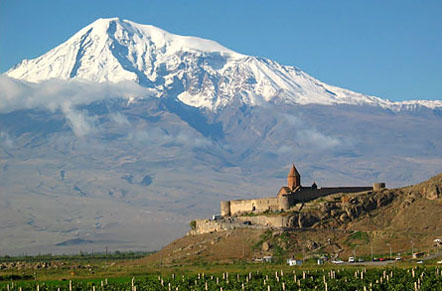
Middle East Map

The 325-kilometer-long Turkish-Armenian border is closed in April 1993 in response to Armenia's ambivalence over the recognition of its common border with Turkey and Armenian aggression directed toward Azerbaijan in the Nagorno-Karabakh dispute.
This situation is harming the economies of both countries; Turkey and Armenia. The trade to Armenia from Turkey is made by using border of Iran. In addition, the oil pipeline between Azerbaidjan (Baku-Ceyhan) passing trough Georgia instead of Armenia which was a shortcut.
I think unless Armenia continues to his statu quo politics; there will be no solution for this case. (Armenia wants to change the borders and wants compensation because of the things happened in 1st world war)
I will write a more detailled article about this problem...
Independence for Kosovo
Kosovo war which happened in 1389 between Serbs-Christian allies and Ottomans, has very important results. (the second one in 1448 )
Now, US and EU are deciding about the independence of Kosovo.
We will see what it will bring to Balkans, more war or peace.
I wish, a world without borders could be possible...This can be a solution ;)
Here is the geographical location of Kosovo
Now, US and EU are deciding about the independence of Kosovo.
We will see what it will bring to Balkans, more war or peace.
I wish, a world without borders could be possible...This can be a solution ;)
Here is the geographical location of Kosovo
Remember Srebrenica
Srebrenica, Bosnia, the world's first United Nations Safe Area, was the site of the worst case of genocide in Europe since World War II. In July 1995, the Bosnian Serb army staged a brutal takeover of the small, intimate spa town and its surrounding region. Over a period of five days, the Bosnian Serb soldiers separated Muslim families and systematically murdered over 7,000 men and boys in fields, schools, and warehouses.
Holland army who was responsible to protect the area, only watched (and also helped) the serbs.
There is no word to tell, unfortunately. I hope justice and peace for all.
REMEMBER SREBRENICA
video1
video2
Holland army who was responsible to protect the area, only watched (and also helped) the serbs.
There is no word to tell, unfortunately. I hope justice and peace for all.
REMEMBER SREBRENICA
video1
video2
Some Facts from November 2003 Istanbul

5 years ago, on 15 and 20 November in Istanbul after suicidal attacks 62 people died , 718 people injured. The first target was two sinagogs. After five days, the next was the english consulate and Hsbc central office in Levent which are situated in cultural and economical center of Istanbul.

2600 kilogram of explosif are used (one third of explosifs exploded)for this attacks regarding to reports.
here is a video of explosion.
15 February 2008
12 February 2008
3D Pictures of Istanbul and more

Here is a very interesting site!!
You too can visit these unique places: Just download and run the programs in the site. Once inside the program, move the mouse to the direction you want to look at. You can use the scroll wheel to zoom in and out. If there is no intervention for five seconds, the program will start showing you around automatically.
Press F9 to get a list of the 3D sites you downloaded (residing in the same directory) and load the one you like by moving the selection with the direction keys and pressing Enter. Click the left mouse button to jump to the closest (visible) site.
04 February 2008
Contact Me
if you have any questions regarding me, you can contact me by calling
coskunist (at) gmail.com
or e-mailing ne and I'll get back to you as soon as possible. Thanks!
coskunist (at) gmail.com
FAQ | Frequently Asked Questions
Q:Where and when did you born?
A: 1983 , Erzurum
Q:Do you have brothers and sisters?
A: I have two big brothers
Q:Where do you live?
A: In Istanbul.
A: Actually, I am a master student in Picardie University, at Information Management. I also work in a software office, as a programmer.I graduated from Galatasaray University, Computer Engineering.
I like to spend time with my computer, with my friends like all people. I try to not watch much television these days, I only try to be selective (movies, documentaries, concerts...). I am a supporter and a member of Galatasaray Football Club, so I'm very interested about soccer. Furhermore, I am a member of the Galatasaray Scuba Club. In addition, I like cycling, walking, excursions, trekking etc...
Q:What kind of music you listen?
A: I listen all kind of music. My favourite bands are the followings:
Gogol Bordello, Tea Party, Led Zeppelin, Ben Harper, Yann Tiersen,Louise Attaque, Jamiroquai, Buena Vista Social Club, Manu Chao, Bob Marley, Cake, Björk, Moloko, Norah Jones, Manic Street Preachers, Smashing Pumpkins, Dead Can Dance,Burhan Ocal, Asik Veysel, Yansimalar and many more...
Q:What are your favourite movies?
A:Hard Question.. Some of them are the followings...
Good Bye Lenin, Dancer in The Dark, Back to the Future I II III, The Ring, Fight Club, Matrix I, American History X, Donnie Darko, American Beauty, Peuple Migrateur, Equilibrium, Forrest Gump, Memento, Lord of the Rings I II III, Avare (an indian movie), L.A. Confidential, Snatch, Lock Stock&Two Smoking Barrels,English Patient, Willow, Truman Show, Le Fabuleux Destin D'Amelie Poulain, As good as it gets, Neredesin Firuze...
cidade de deus- city of god
(favourite actors Jack Nicholson, Brad Pitt, Edward Norton)
(favourite actress scarlett johansson, natalie portman )
Subscribe to:
Posts (Atom)